
Look Beyond the Label: How to Read a Mānuka Honey Jar with Confidence
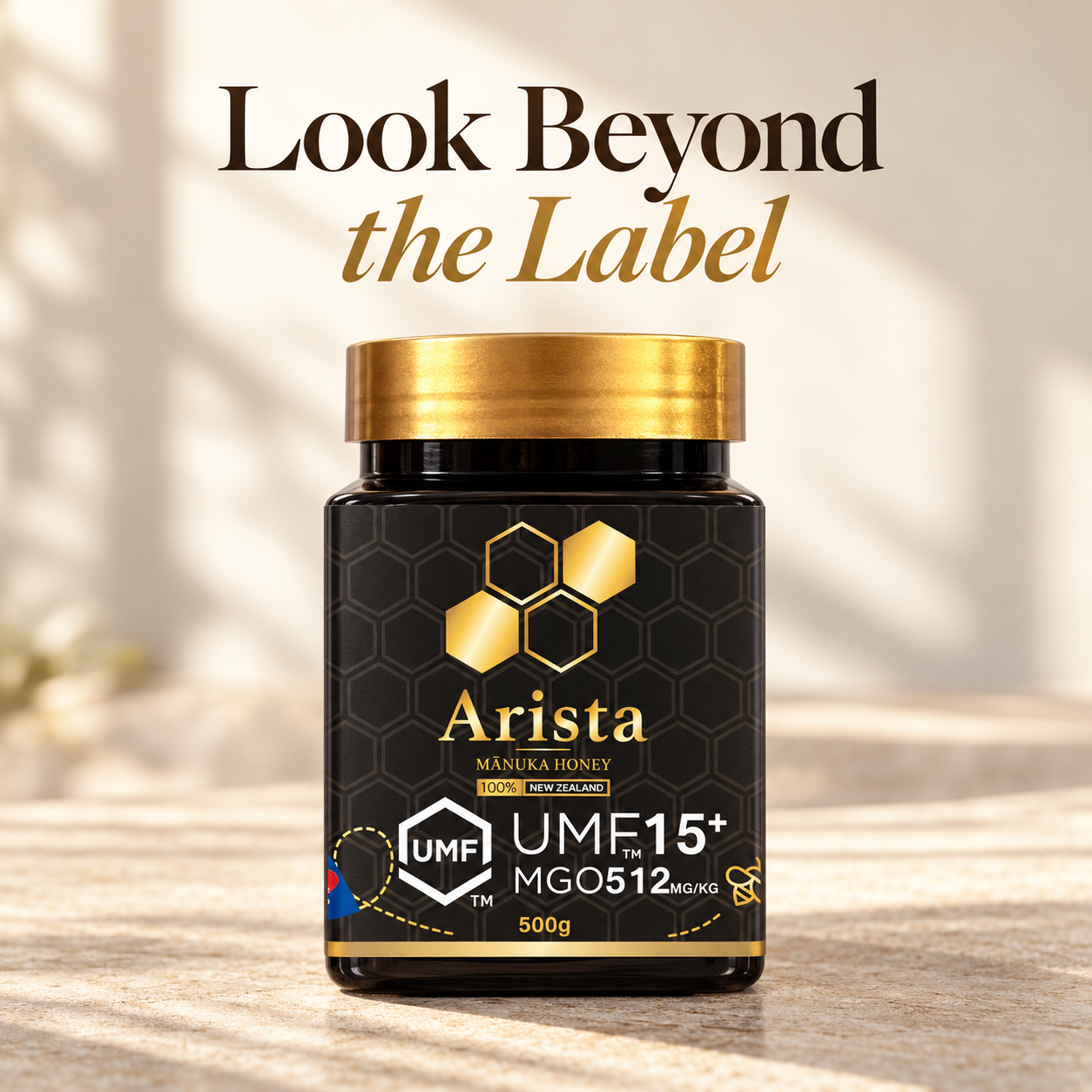
A practical guide to understanding product information, origin, grading and certification.
Choosing a premium mānuka honey should be about more than recognising a familiar number on a jar. A well-informed decision starts with understanding the information presented on the label, what each detail tells you, and how the different pieces fit together.
Whether you are discovering New Zealand mānuka honey for the first time or comparing products for your next purchase, here is a practical framework to help you look beyond the label.
1. Start with the Product Identity
Begin by identifying exactly what you are buying. Look for the product name, the stated mānuka honey grade or classification, and the information that distinguishes one product from another.
Different products may be designed for different preferences and price points. Reading the full product description helps you compare like with like rather than relying on a single headline number.
2. Understand the MGO Number
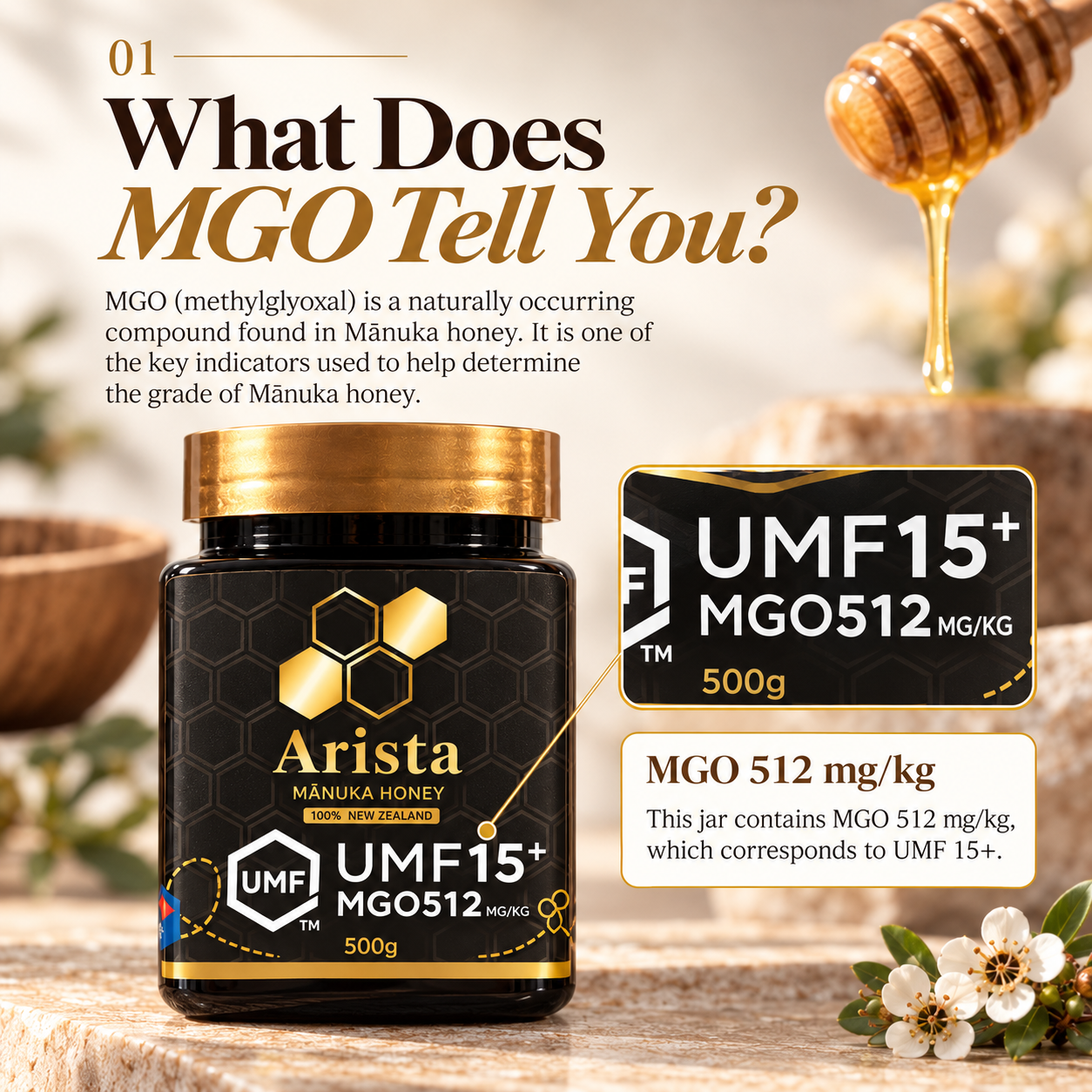
MGO stands for methylglyoxal, a naturally occurring compound associated with mānuka honey. An MGO value expresses the concentration of this compound, commonly in milligrams per kilogram (mg/kg).
The number is useful information, but it is only one part of the picture. It does not, by itself, establish every aspect of a product's origin, authenticity, freshness or overall quality.
When comparing jars, consider the MGO declaration alongside the product's other verified information.
3. Look for Relevant Certification Information
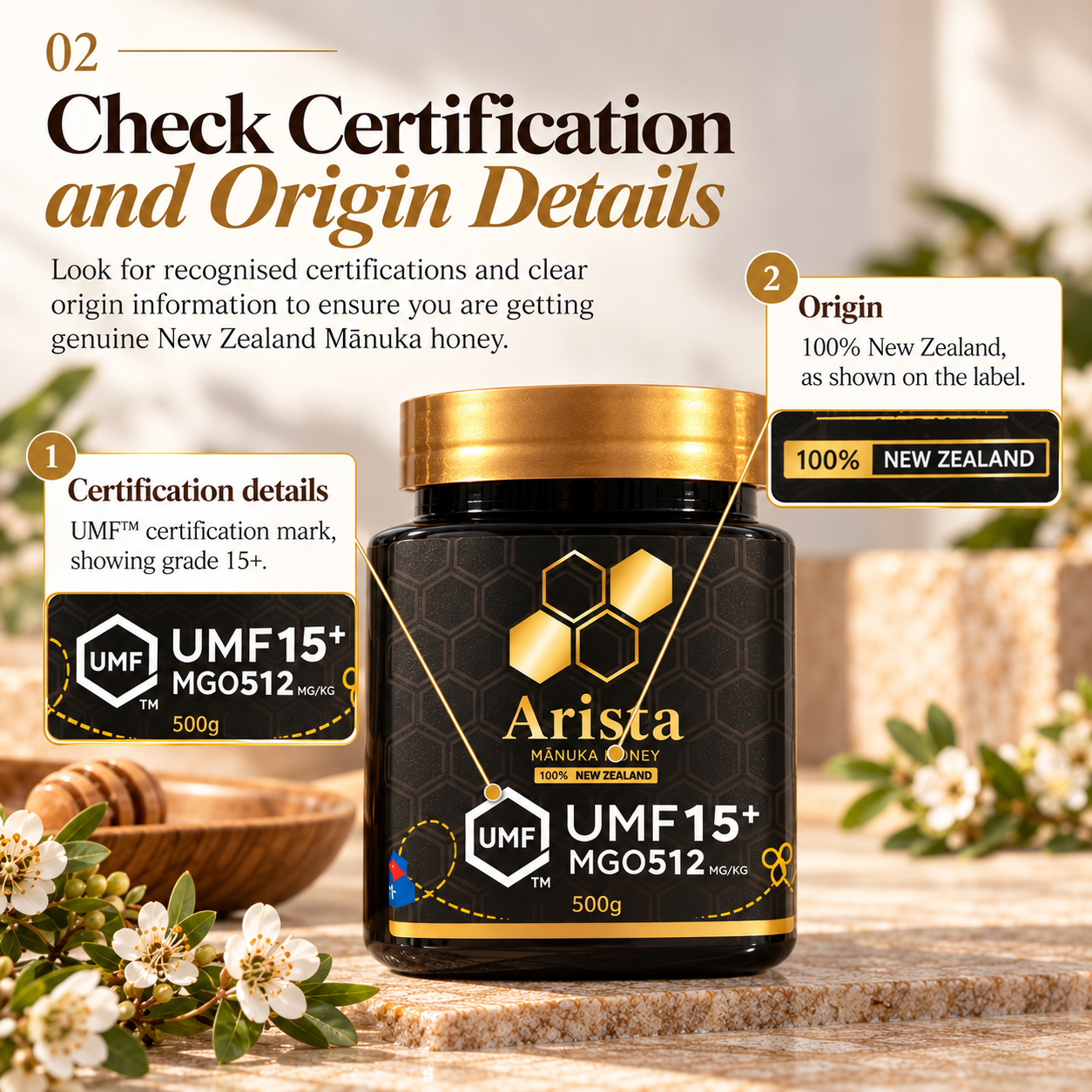
A recognised certification mark can provide an additional layer of assurance when it is used by an appropriately licensed producer and applies to the product in question.
For UMF™-certified mānuka honey, the UMF™ system evaluates four key markers: MGO, leptosperin, DHA and HMF. Together, these help assess potency, authenticity and quality-related factors, including freshness.
When checking a UMF™-labelled product, examine the mark and associated product information. Where applicable, look for the licensed brand's details and verify them through official UMF Honey Association resources.
Remember that no single visual feature should be treated as conclusive proof of authenticity on its own.
4. Check the Origin and Producer Information
New Zealand origin matters when choosing genuine New Zealand mānuka honey. Read the origin statements and producer information carefully, and look for relevant official or independently verifiable details.
For products sold in export markets, applicable regulatory requirements and traceability information can also help consumers understand where the product comes from and how it is represented.
Clear, consistent information is more useful than broad marketing language alone.
5. Compare the Whole Product, Not Just One Number
Before making your choice, consider these questions:
What product and grade am I buying?
What does the stated MGO value tell me?
Does the product carry a relevant, verifiable certification?
Are the origin and producer details clear?
Does the product information match my preferences and budget?
This approach helps you make a more informed comparison without assuming that one number or symbol tells the entire story.
A More Informed Way to Choose
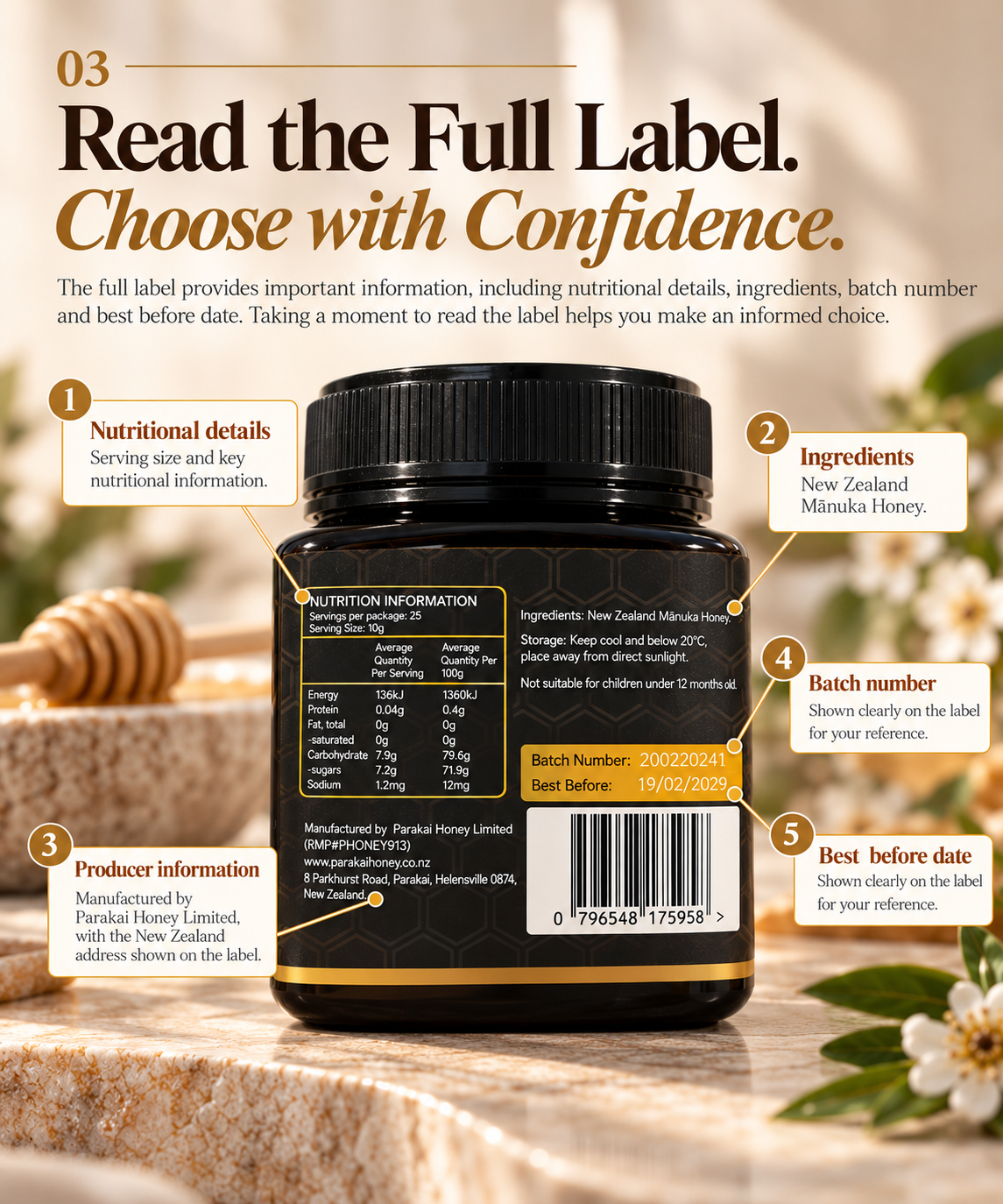
At Parakai Honey, we believe understanding your honey is part of appreciating its quality. By taking a moment to read the label carefully, you can better understand the product in front of you and make a decision based on clear information.
Explore our range of New Zealand mānuka honey and discover the details behind every product.
From New Zealand to your table — informed choices begin with understanding.
Consumer information only. Certification marks, grading statements and origin claims should be verified against the current product packaging and applicable official requirements.
