
MGO and UMF™: Two Different Pieces of Information in Mānuka Honey
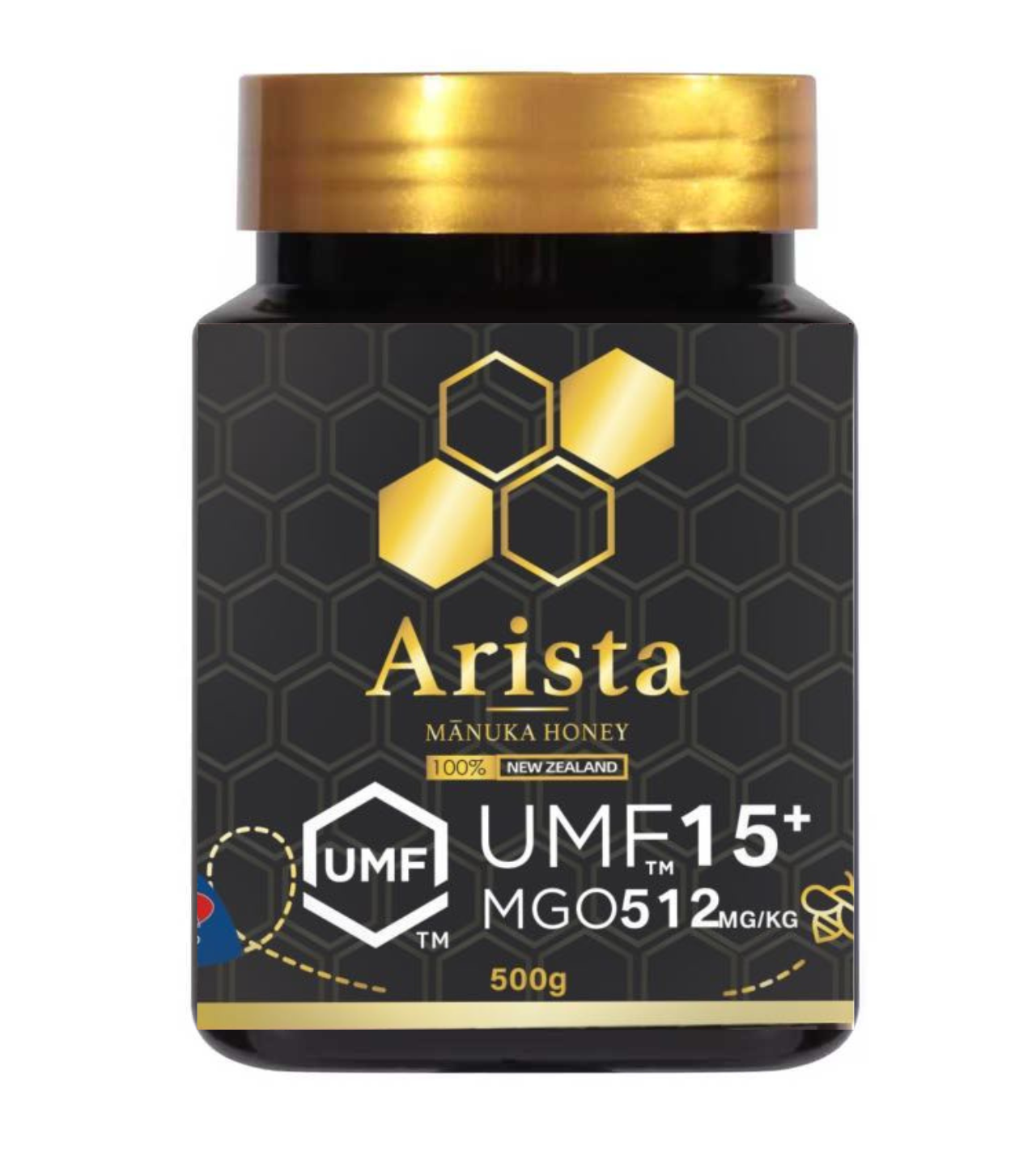
Understanding the difference between a compound measurement and a broader quality assurance system.
If you have ever compared jars of New Zealand mānuka honey, you have probably noticed two terms on product labels: MGO and UMF™.
They are closely related, but they do not mean the same thing.
Understanding the distinction can help you interpret product information more accurately and make a more informed decision when choosing mānuka honey.
What Is MGO?
MGO stands for methylglyoxal, a naturally occurring compound found in mānuka honey.
An MGO value indicates the concentration of this compound in the honey, commonly expressed in milligrams per kilogram (mg/kg).
For example, an MGO declaration provides information about the stated methylglyoxal concentration of a product. It is a useful measurement, but it describes one specific aspect of the honey rather than every element of its quality.
MGO is therefore one important piece of information to consider when comparing mānuka honey products.
What Is UMF™?
UMF™ stands for Unique Mānuka Factor. It is a quality assurance and certification system administered by the UMF Honey Association for New Zealand mānuka honey.
Unlike a single-compound measurement, the UMF™ system evaluates four key markers:
MGO (methylglyoxal): A key marker associated with potency.
Leptosperin: A naturally occurring marker used to help assess authenticity.
DHA (dihydroxyacetone): A precursor that is converted into MGO over time.
HMF (hydroxymethylfurfural): A marker used to assess factors associated with freshness, heating and storage.
Together, these measurements provide a broader assessment of important quality characteristics than an MGO value alone.
The UMF™ mark is used under the system's licensing requirements. Consumers can consult the official UMF Honey Association website for further information about the certification and licensed producers.
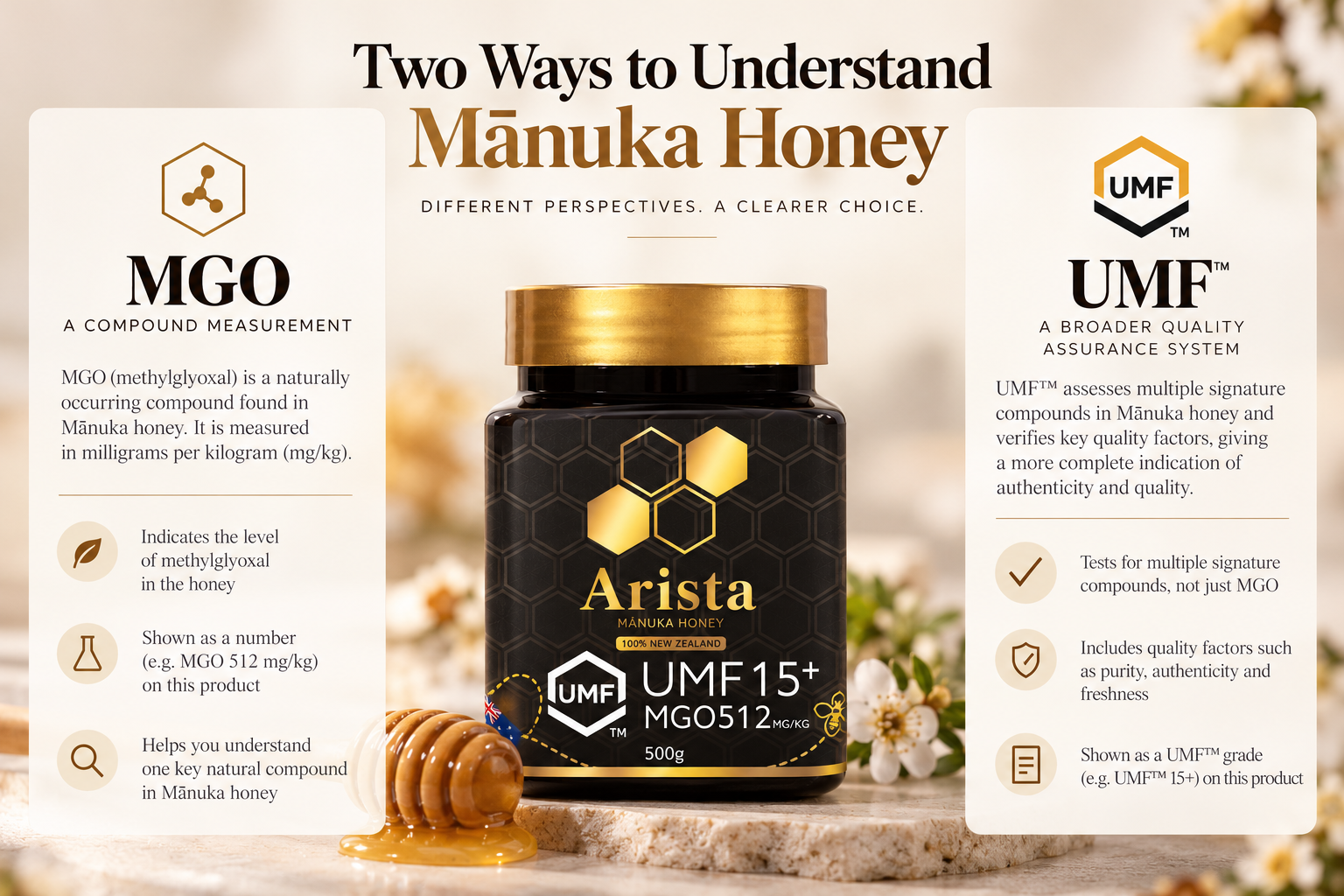
MGO vs UMF™: What Is the Difference?
The simplest way to understand the distinction is to consider what each tells you.
MGO tells you about one compound.
It indicates the stated concentration of methylglyoxal in the honey.
UMF™ provides a broader quality assurance framework.
It brings together multiple markers to assess potency, authenticity and other quality-related factors, including freshness.
This is why the two should not be treated as interchangeable labels.
An MGO value cannot, by itself, be converted into a UMF™ rating. The UMF™ rating reflects a wider assessment under its own certification framework.
How Should You Use This Information When Shopping?
When comparing New Zealand mānuka honey, start by reading the complete product label.
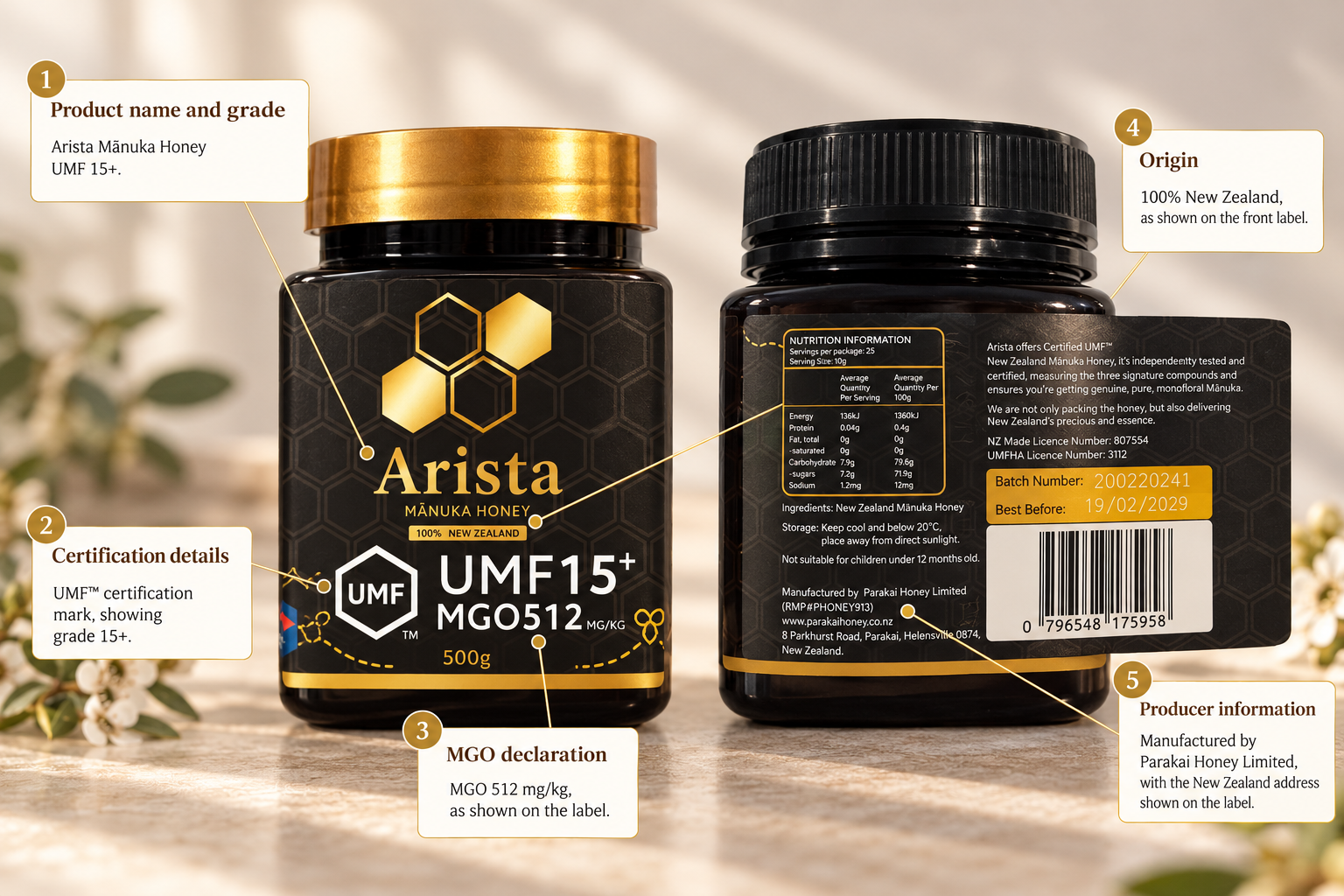
Consider the MGO value alongside any applicable certification information, origin statements, producer details and product grade.
If a jar carries the UMF™ mark, review the associated product and licensing information rather than relying on the logo alone. Official verification resources can provide further guidance.
Most importantly, compare products based on the information that is actually available and verified. Avoid assuming that one number tells you everything about a jar.
A Clearer Understanding Starts Here
At Parakai Honey, we believe that clear product information helps consumers understand what they are choosing.
MGO and UMF™ each have a distinct role in explaining mānuka honey. Knowing the difference makes it easier to read a label, understand the information presented and compare products with greater confidence.
or a deeper introduction, explore our existing articles:
What Is MGO in Mānuka Honey? A Simple Guide
What Is UMF™? The Gold Standard of Authentic NZ Mānuka Honey
MGO measures one important compound. UMF™ looks at a broader set of quality markers. Understanding both helps you make a more informed choice.
Product information is provided for educational purposes. Certification details and product claims should be checked against current official guidance and the relevant product packaging.
