
The Honey Texture Lab: What Can You Discover in One Spoonful?
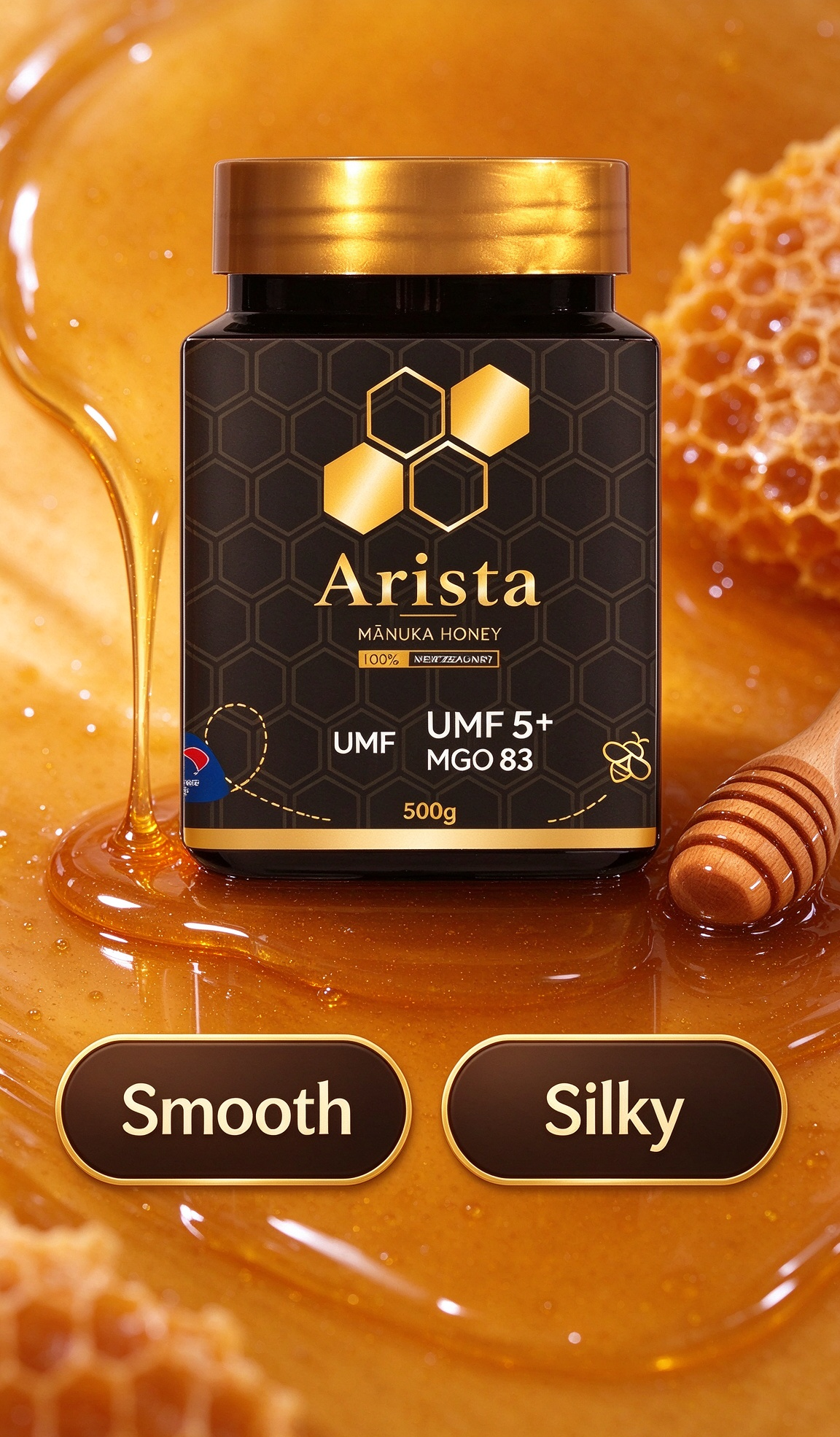
A simple, hands-on way to observe honey's texture, movement and natural character.
Sometimes, the most interesting details are the ones we usually overlook.
A spoonful of honey can offer a fascinating close-up study of texture and movement. Watch how it rests on a spoon, notice how it catches the light and observe what happens when the spoon is gently tilted.
At Parakai Honey, we believe that curiosity is a wonderful starting point for learning about mānuka honey. Our Honey Texture Lab invites you to take a closer look—not to judge a honey by appearance, but to notice the details for yourself.
Your Mini Honey Texture Experiment
You do not need specialist equipment. All you need is a clean spoon, a small amount of honey, a light-coloured surface and a little natural light.
Step 1: Observe the Surface
Place a small spoonful of honey on your spoon and look at it against a simple background.
Notice its surface and how the light reflects from it. Does it appear glossy, smooth or slightly textured?
Try viewing it from different angles. Changing the light can reveal details that are easy to miss at first glance.
Step 2: Watch the Movement
Gently tilt the spoon and observe how the honey moves.
Does it flow slowly, hold its shape for a moment or spread across the spoon?
Describe only what you see. Honey's movement can vary with factors such as temperature, composition and storage conditions, so a single observation does not tell the whole story.
Step 3: Look at the Trail
If you gently lift the spoon, you may see a ribbon or stream of honey falling back into the jar or onto the spoon.
Notice the shape of the stream, how it catches the light and how it settles.
This is a satisfying detail to capture in a short video, but it is not a reliable way to verify authenticity, determine a UMF™ grade or assess quality on its own.
Step 4: Describe the Texture in Your Own Words
Now comes the interactive part.
Choose three words that best describe what you observed. You might choose words such as:
Glossy
Smooth
Rich
Dense
Silky
Slow-moving
These are simply descriptive examples. Your observations may be different, and that is part of the fun.
If you repeat the activity with another honey, you may notice differences. Keep your lighting, spoon and observation method as consistent as possible, and remember that visible differences alone do not establish which honey is better or more authentic.
Does Thick Honey Mean Better Honey?
Not necessarily.
It is tempting to treat thickness, colour or the speed at which honey flows as a shortcut to judging quality. However, these visible characteristics can be influenced by several factors, including temperature, natural composition and crystallisation.
Honey that looks thicker is not automatically more authentic, and a particular flow pattern cannot establish a product's UMF™ grade.
When choosing mānuka honey, look beyond appearance. Read the product label, check the relevant grade and certification information, and consult reliable sources where necessary.
The Honey Texture Lab is designed to encourage observation—not to replace appropriate quality checks.
Turn Your Observations into a Tasting Note
Try completing this simple sentence:
“This honey looks ______, feels ______ and moves ______.”
For example, you might describe a spoonful as glossy, smooth and slow-moving.
There is no correct answer. The aim is to practise noticing details and finding your own words for them.
You could even turn it into a small family activity, a food-photography exercise or a personal tasting journal.
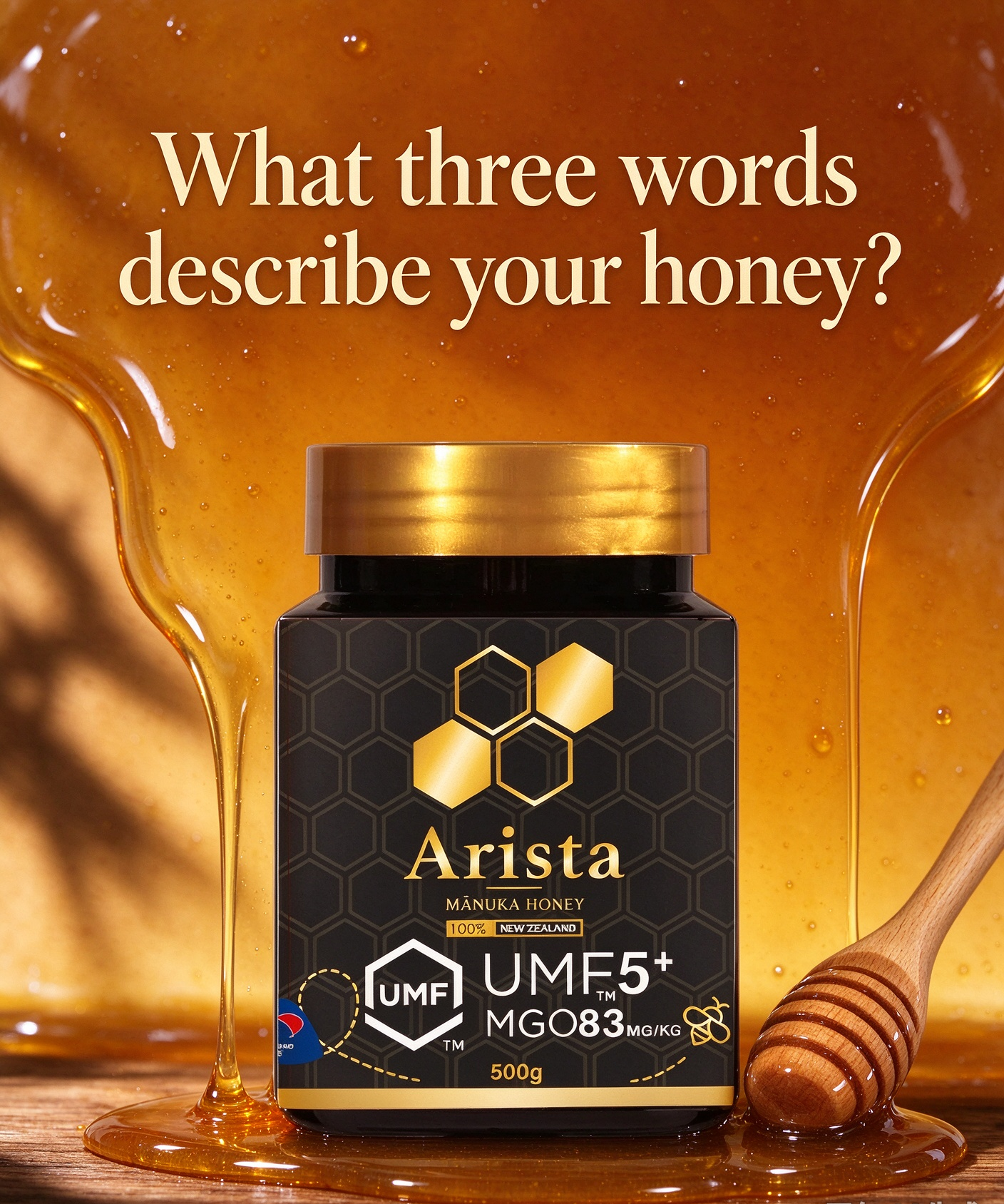
Your Turn: Three Words, One Spoonful
Now we would love to hear from you.
Imagine a spoonful of rich, golden honey catching the afternoon light. What three words would you use to describe its texture?
Would you choose smooth, glossy and silky—or something completely different?
Share your three words and join the conversation.
At Parakai Honey, we believe discovering mānuka honey can begin with something as simple as taking a closer look.
Explore more about mānuka honey with Parakai Honey.
